Qué entender
Learn how the wooden fish supports rhythm and attention in chanting practice.
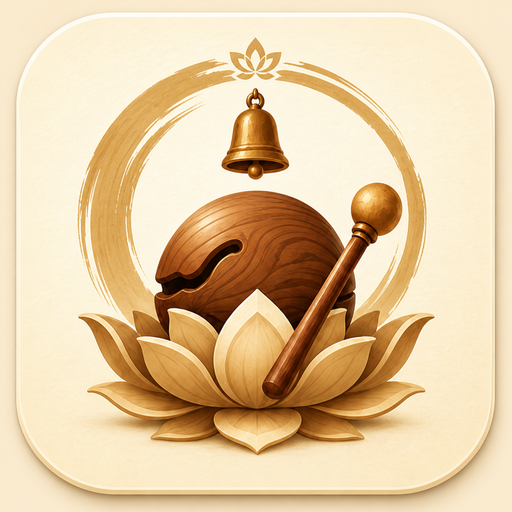
A mokugyo, or wooden fish, is a percussion instrument often used to hold rhythm during chanting. Its steady sound is not meant to rush anyone; it creates a shared reference for voice, breath, and attention.
Cómo practicar
If you are new to it, listen to or tap a slow, steady pulse for a minute before adding a phrase. Let the sound be a point of return rather than something to grip tightly.
Empieza poco a poco, elige un ritmo que te vaya bien y date permiso para volver mañana.
- Elige un tiempo breve, por ejemplo cinco minutos.
- Baja el ritmo cuando lo necesites y observa lo que ocurre.
- Cierra con una campana o una respiración consciente.
Un recordatorio útil
Use and ritual meaning can vary across traditions. When practicing in a community, follow the guidance of its teacher.
Preguntas frecuentes
Where should I begin?
If you are new to it, listen to or tap a slow, steady pulse for a minute before adding a phrase. Let the sound be a point of return rather than something to grip tightly.
What if I only have a little time today?
Use the smallest possible version, even if it is only one minute. Keeping a small appointment with yourself is often more useful than waiting for a perfect window.
Do I need to do it perfectly?
Use and ritual meaning can vary across traditions. When practicing in a community, follow the guidance of its teacher. The aim is to notice and return, not to create the same experience every day.
Abrir Mokugyo para practicar
Learn how the wooden fish supports rhythm and attention in chanting practice.
Abrir Mokugyo para practicar